
How to Choose the Right Accent Chair for Your Space

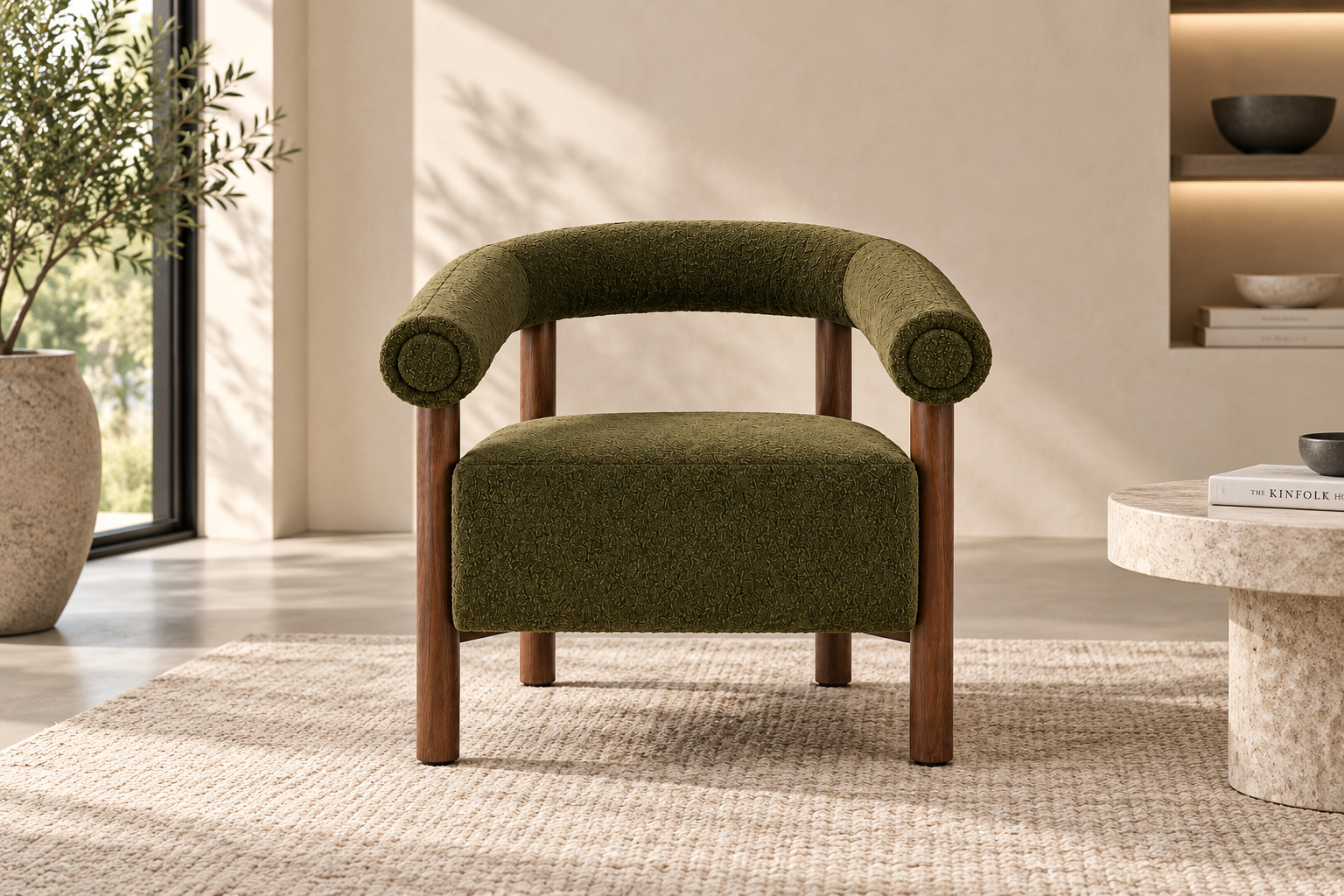
Discover how to choose, style and position an accent chair to complement your living room, bedroom or commercial space.
A room can have the sofa, coffee table, rug and all the finishing touches — yet still feel like something is missing.
Often, that missing element is contrast.
Maybe the room needs a softer shape. Perhaps it needs another layer of texture, a stronger focal point, or simply a place to sit that feels a little more intentional.
That’s where an accent chair comes in.
One well-chosen chair can change the character of a room without requiring you to replace everything you already have. And when you’re refreshing a space, that’s exactly the kind of change worth considering.
But choosing the right accent chair isn’t just about picking the one that catches your eye.
Its size, shape, upholstery, frame and relationship with the rest of your furniture all matter.
So, how do you choose an accent chair that actually works in your space?
Let’s get into it.
What Is an Accent Chair?
An accent chair is a standalone chair that adds something distinctive to an interior while providing additional seating.
Unlike a dining chair or an office chair, an accent chair has more freedom to contribute to the look and personality of a room.
It can become a focal point, introduce a new texture, break up a uniform furniture arrangement or create a separate seating area.
And here’s something important:
Your accent chair doesn’t have to match your sofa.
1. Start With Size and Proportion
Before choosing a chair, look at the space around it.
A large living room can accommodate a more generous accent chair, while a smaller room may benefit from a design with a lighter visual footprint.
Think about more than whether the chair physically fits.
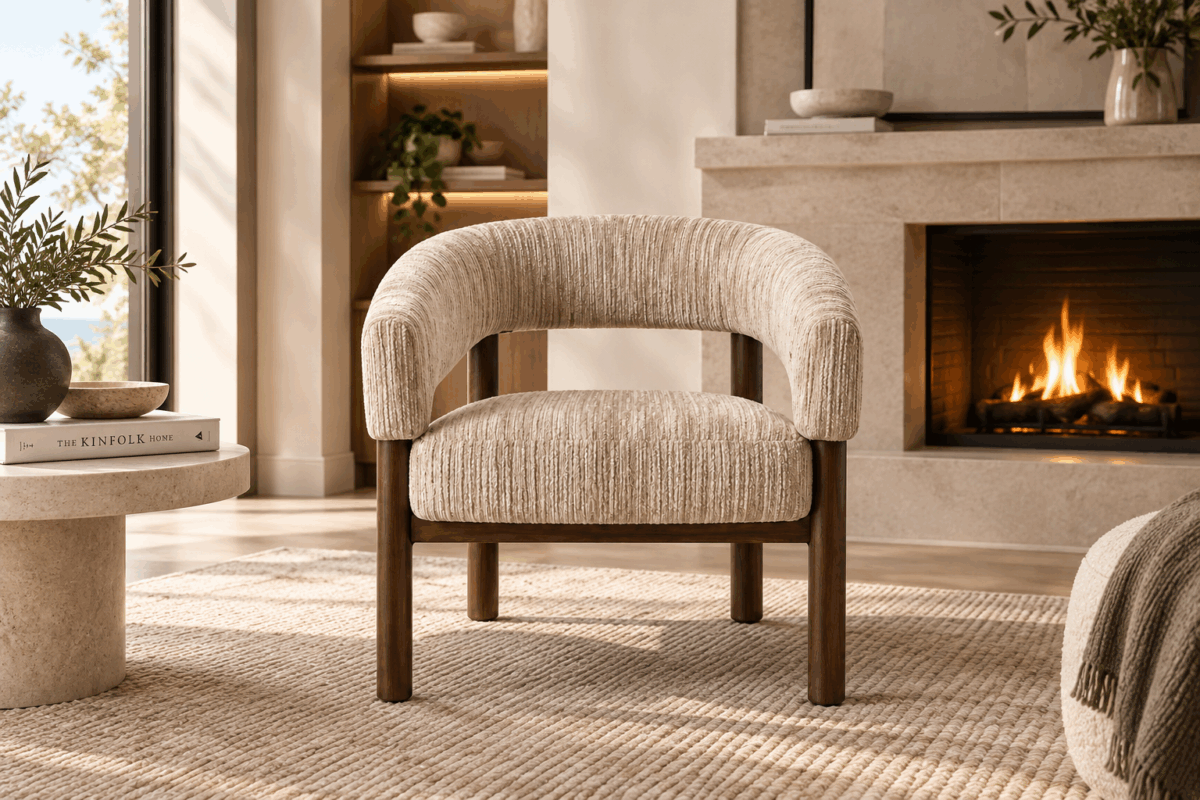
Consider the space needed to walk around it, open nearby doors, use a side table, or move between different areas of the room.
A chair should fit the room — not fight it.
2. Look at Your Sofa
One of the biggest questions people ask when choosing accent chairs is:
Should an accent chair match the sofa?
Not necessarily.
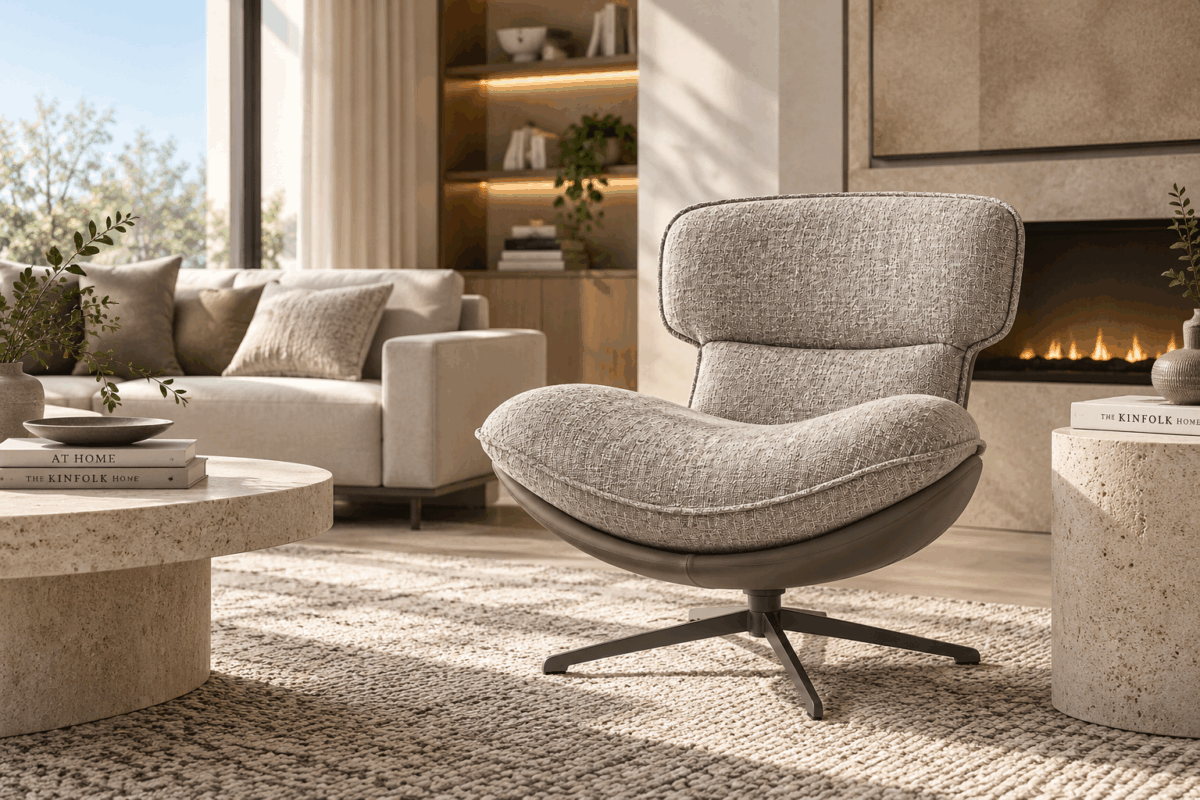
Instead of looking for an exact match, look for a relationship.
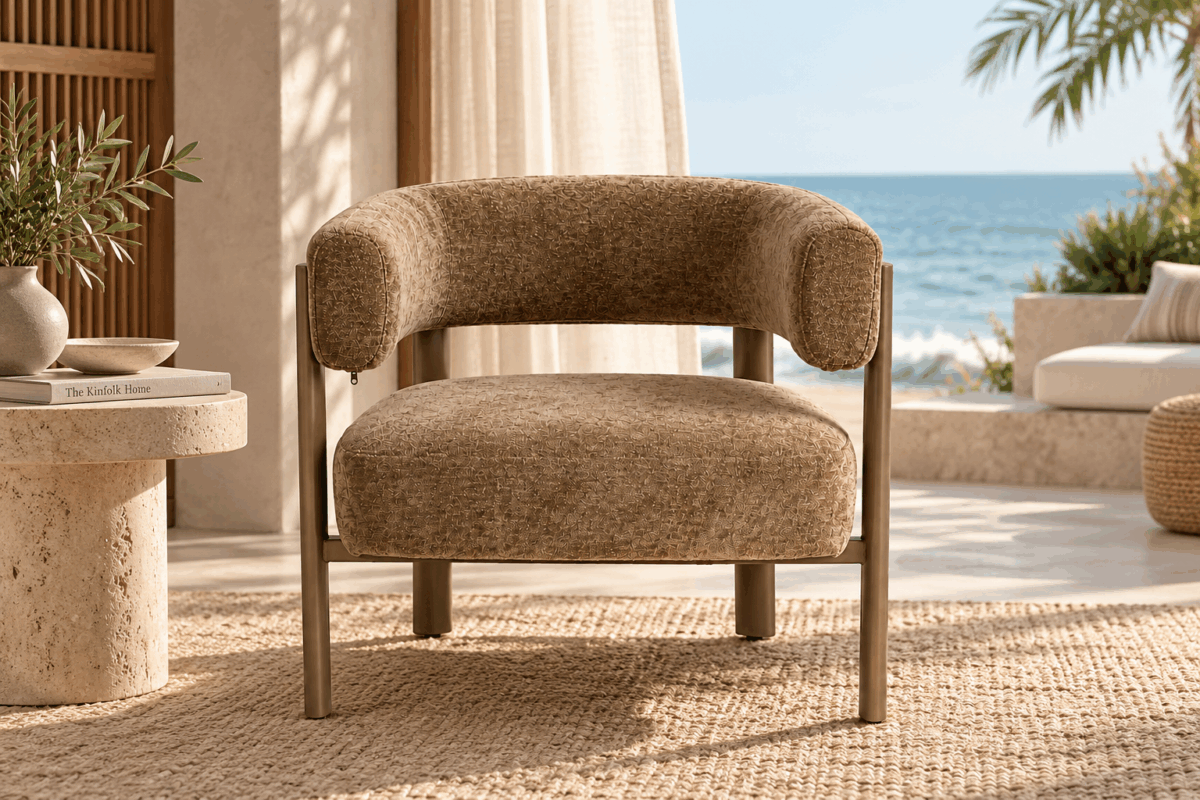
A straight-lined sofa could be paired with a chair featuring softer curves.
A neutral sofa could be complemented by a different texture.
A heavy upholstered sofa could be balanced with a chair featuring a lighter frame.
The goal is coordination, not duplication.
3. Think About Shape
The silhouette of a chair can completely change how it feels within a room.
Curved chairs can soften an interior dominated by straight lines.
More structured designs can introduce definition into softer spaces.
And sculptural silhouettes can turn a simple seating area into a focal point.
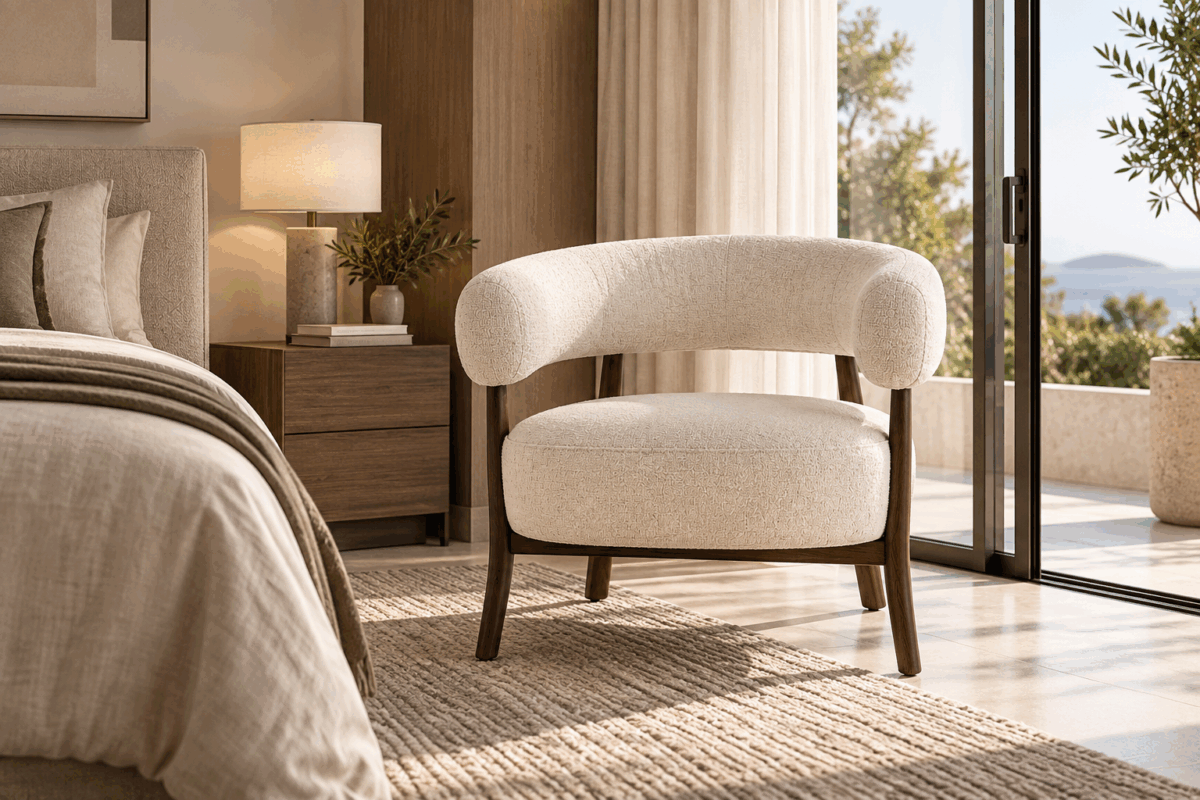
Upholstery can soften the overall appearance and make a seating area feel more inviting.
You don’t always need to repeat the same material throughout a room.
Sometimes, introducing a new material is exactly what creates the contrast you’re looking for.
Where Should You Place an Accent Chair?
Once you’ve chosen the chair, placement matters as much.
Here are some of the most effective places to use one.
Beside a Sofa
An accent chair positioned beside a sofa can create a balanced conversation area while providing additional seating.
Opposite the Sofa
Place the chair opposite your main sofa to create a more deliberate seating arrangement.
In an Empty Corner
An unused corner can become a completely different part of the room with the addition of a chair, side table and lamp.
Beside a Window
A chair near a window can create a natural reading or relaxation spot.
In the Bedroom
Accent chairs aren’t limited to living rooms.
A well-proportioned chair can provide a comfortable place to sit while adding another layer of personality to a bedroom.
So Why Add an Accent Chair to Your Space?
Sometimes, one additional piece is enough to change the way a room feels.
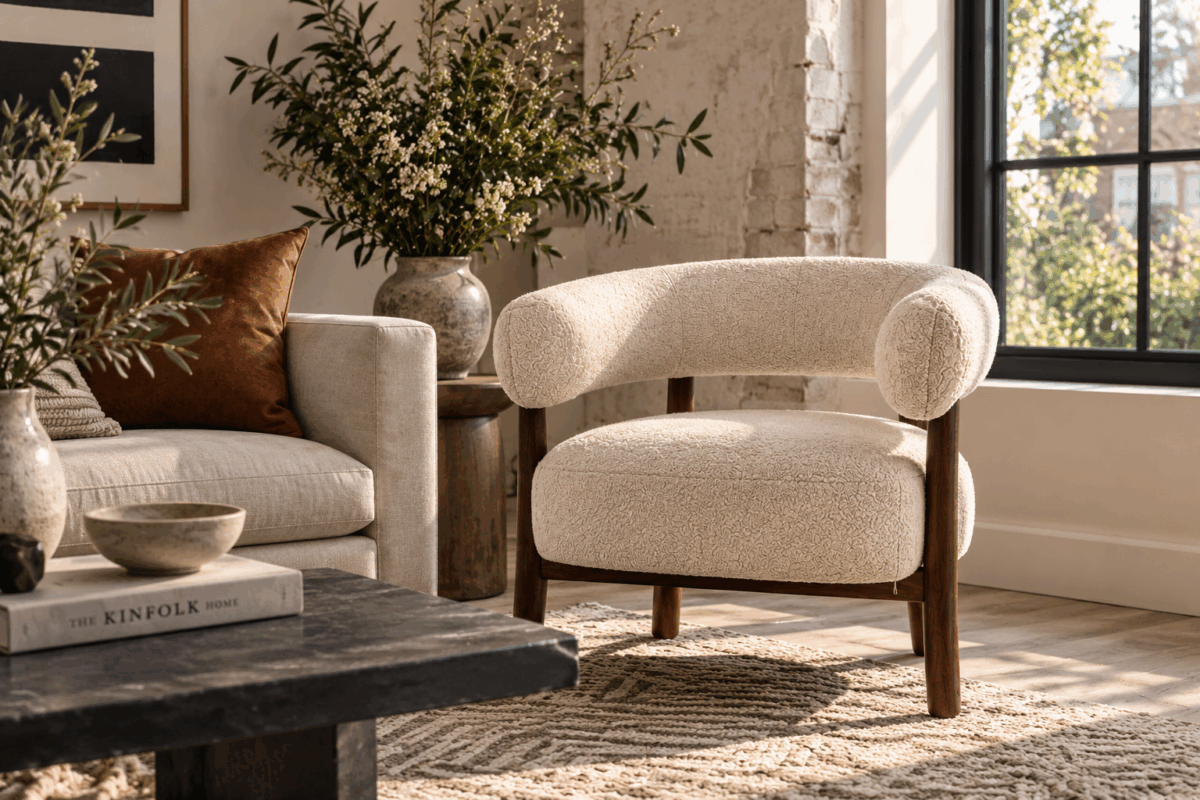
An accent chair can do more than provide another place to sit. The right one can bring balance, texture and personality while making better use of the space you already have.
Create a Focal Point
A distinctive chair gives the eye somewhere to land. In a neutral or understated room, an interesting silhouette can become the detail that brings the entire space together.
Add Texture
Texture adds depth without requiring a dramatic colour change. Upholstery can work alongside wood, metal, rugs and other materials to create a more layered interior.
Introduce Contrast
Not everything needs to match. Combining different shapes, colours and finishes can keep a room from feeling too uniform while still maintaining a cohesive look.
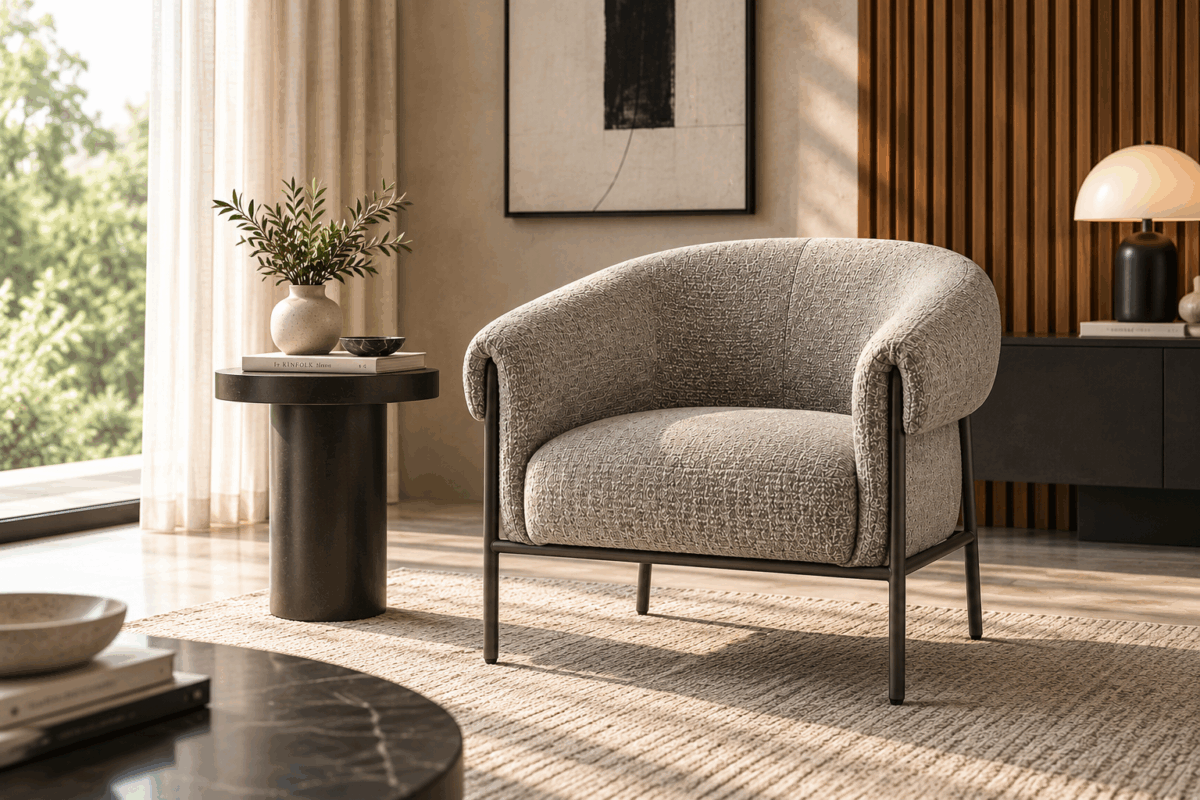
Add Flexible Seating
An accent chair gives you an extra place to sit without the visual weight or footprint of another sofa — making it a practical addition to both compact and spacious interiors.
Give Unused Spaces a Purpose
An empty corner doesn’t have to stay empty.
Place a chair beside a window to create a quiet reading spot, beside a sofa to complete a conversation area, or in a bedroom to create a comfortable place to pause.
Ultimately, an accent chair doesn’t need to transform the entire room.
Sometimes, it just needs to change one corner — and let the rest of the space follow.